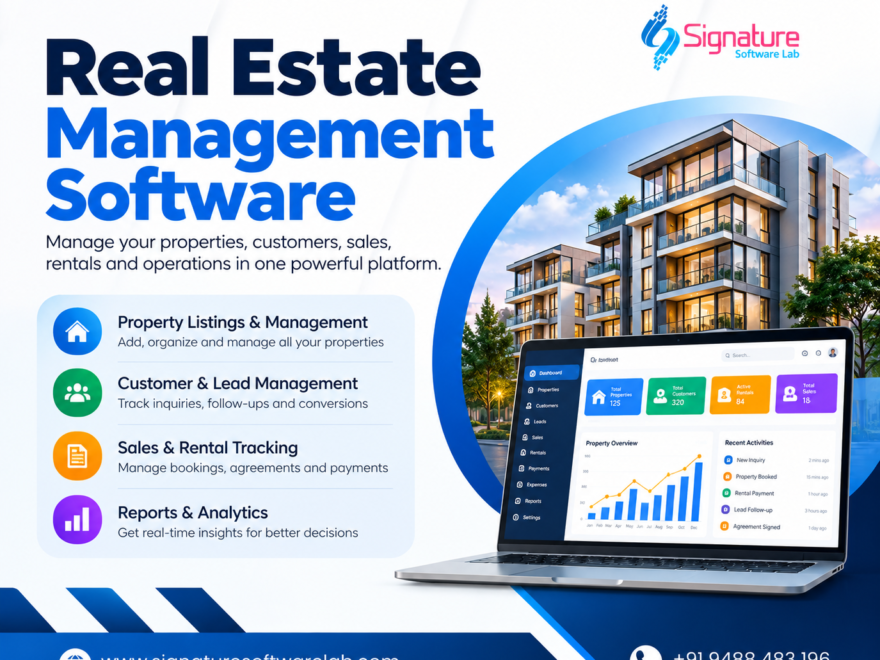
Introduction
Real estate investment has become an attractive option for many young professionals, entrepreneurs, and first-time investors looking to build long-term wealth. From purchasing residential apartments to investing in commercial properties and rental homes, real estate offers several opportunities to generate income and grow assets over time.
However, owning property is only one part of a successful investment strategy. Managing tenants, collecting rent, tracking expenses, maintaining property records, and monitoring investment performance can become challenging, especially when investors own multiple properties.
This is where real estate management software makes a difference. By bringing essential property management activities into one digital platform, investors can organize their operations, reduce manual work, and make more informed decisions.
In this article, we explore how real estate software helps young investors manage properties smarter and build a more organized investment business.
Table of Contents
1.Why Are Young Investors Interested in Real Estate?
Many young investors are exploring real estate as part of their financial planning. Some are interested in earning rental income, while others want to acquire assets that may appreciate in value over the long term.
Several factors contribute to this interest:
- Long-term wealth creation: Property can be one component of a diversified investment portfolio.
- Rental income opportunities: Residential and commercial properties may generate recurring income.
- Business opportunities: Investors can explore property development, rental management, and real estate services.
- Digital accessibility: Online property listings and digital tools make property research and administration more convenient.
- Better financial planning: Modern software helps investors organize property-related income, expenses, and documents.
However, real estate investment also involves risks, including financing costs, vacancies, unexpected repairs, market fluctuations, and limited liquidity. Successful investors need more than capital; they need effective planning and property management.
2. What Is Real Estate Management Software?
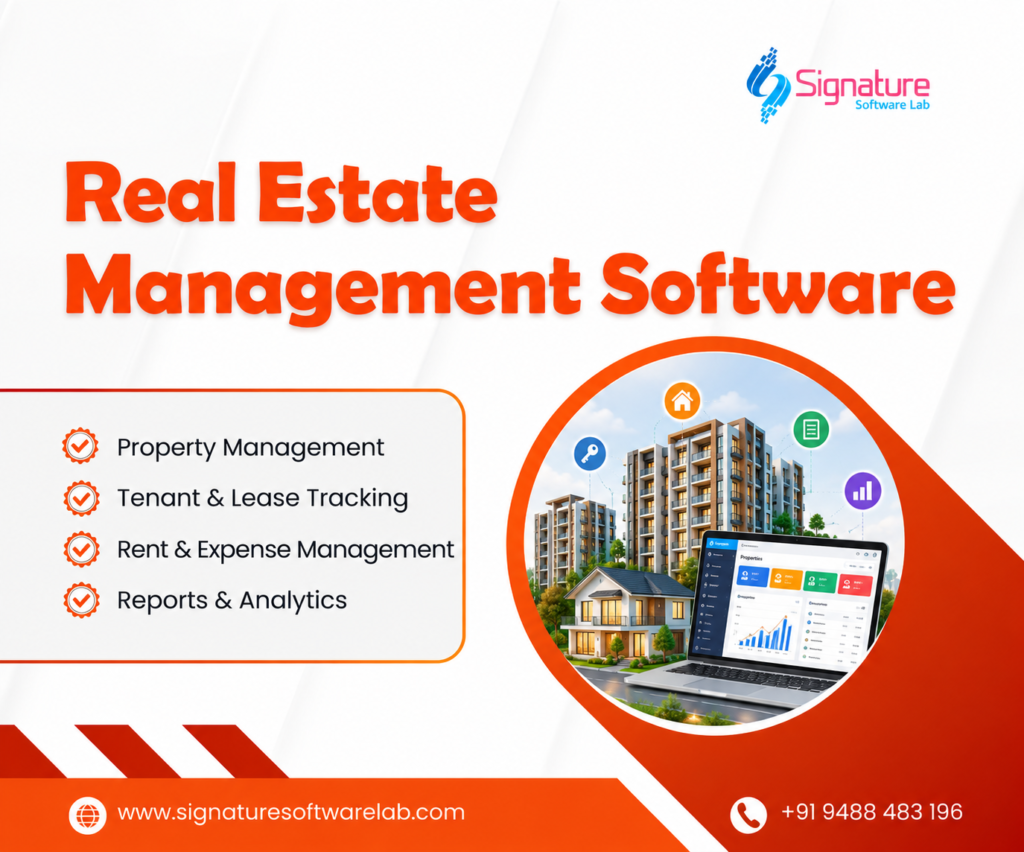
Real estate management software is a digital solution that helps property owners, investors, real estate agents, and property management companies organize and manage their property-related activities.
Instead of maintaining separate spreadsheets, paper files, and payment records, users can manage essential information through a centralized system.
Depending on the software, features may include:
- Property and unit management
- Tenant and customer management
- Rental payment tracking
- Expense and income management
- Lease and agreement records
- Maintenance request tracking
- Document management
- Financial reports and dashboards
- Payment reminders and notifications
For young investors who want to manage their properties efficiently without spending excessive time on administration, these tools can provide a more structured approach.
3. Seven Ways Real Estate Software Helps Young Investors
1. Manage Multiple Properties from One Dashboard
Managing one rental property may seem straightforward. But when an investor owns several apartments, houses, or commercial units, keeping track of everything becomes more complicated.
Real estate software allows investors to maintain property details in one place, including addresses, ownership information, rental status, tenant details, and important dates.
A centralized dashboard helps investors quickly understand which properties are occupied, which units are vacant, and which activities require attention.
Example: An investor with five rental apartments can review occupancy and rental information from a single system rather than checking multiple spreadsheets.
2. Track Rental Income and Payments
Rental income is an important part of many property investment strategies. However, manually checking payment dates, outstanding balances, and tenant payment histories can consume valuable time.
Real estate management software can help investors:
- Record rental payments.
- Monitor outstanding rent.
- Maintain payment histories.
- Track upcoming due dates.
- Generate payment summaries.
- Send reminders where supported.
These features improve visibility into rental collections and make it easier to identify delayed payments.
Investors should still reconcile software records with their bank statements to maintain accurate financial information.
3. Monitor Expenses and Understand Profitability
Property ownership involves more than collecting rent. Investors may need to pay maintenance charges, insurance premiums, property taxes, repair costs, management fees, and loan interest.
Without organized records, it can be difficult to understand how much income a property actually generates.
4. Improve Tenant Management
Maintaining a good relationship with tenants is essential for effective rental property management.
Investors need to maintain accurate tenant details, lease periods, rent amounts, contact information, and agreement documents. Missing renewal dates or losing important records can create unnecessary complications.
Real estate software can centralize tenant information and help users track:
- Tenant contact details
- Lease start and end dates
- Security deposit records
- Rental payment histories
- Renewal reminders
- Tenant complaints and requests
When communication and records are organized, property owners can provide a more professional rental experience.
5. Simplify Maintenance and Repair Management
Property maintenance is another important responsibility. A delayed repair can affect tenant satisfaction and may lead to higher costs later.
Property management software can help investors record maintenance requests, schedule repairs, assign tasks, and track completion status.
For example, if a tenant reports a plumbing issue, the investor can record the request, arrange a repair, document the expense, and retain the service history.
This creates a clearer record of property maintenance and helps investors plan future repairs.
6. Store Property Documents Securely
Property investment involves important documents, including ownership records, rental agreements, inspection reports, insurance documents, receipts, and maintenance records.
Keeping everything in physical files or scattered digital folders can make documents difficult to locate when needed.
Depending on the platform, real estate software can help investors organize digital documents by property, tenant, or transaction.
Investors should choose a platform with appropriate access controls, secure backups, and data protection measures. They should also maintain independent backups of critical documents where appropriate.
7. Make Better Investment Decisions with Reports
Young investors often need to evaluate whether a property is performing as expected.
Real estate software may provide reports showing rental income, operating expenses, occupancy, outstanding payments, and property-level financial performance.
These reports can help investors compare properties, review cash flow, identify recurring expenses, and plan maintenance budgets.
For example, if one property regularly generates high repair costs while another produces more consistent rental income, the investor can investigate the reasons and assess the next steps.
Software supports decision-making, but it does not guarantee investment returns or replace professional financial and legal advice.
4. Essential Features Young Investors Should Look For
Not every real estate software product offers the same capabilities. Before choosing a solution, investors should consider their current portfolio size and future plans.
The following features are particularly useful:
Property management: Organize multiple properties, units, and occupancy details.
Rental tracking: Record rent payments, outstanding balances, and payment histories.
Financial management: Monitor income, expenses, deposits, and property-level performance.
Tenant management: Maintain tenant information, agreements, and renewal dates.
Maintenance management: Track repair requests, service schedules, and expenses.
Reporting dashboard: Review key information without manually combining multiple records.
Document management: Store and retrieve property-related documents.
Mobile accessibility: Access important information while travelling or visiting properties, where supported.
Security and permissions: Protect financial and tenant information through appropriate access controls.
Investors should also evaluate pricing, ease of use, customer support, data export options, and the ability to scale as their portfolio grows.
5. Manual Property Management vs. Real Estate Software
| Activity | Manual management | Software-based management |
|---|---|---|
| Property records | Paper files or separate spreadsheets | Centralized digital records |
| Rent tracking | Manual payment checks | Organized payment tracking |
| Expense monitoring | Separate calculations | Categorized expense records |
| Tenant information | Individual files or messages | Centralized tenant profiles |
| Maintenance | Calls, messages, and notes | Trackable maintenance records |
| Reporting | Time-consuming compilation | Reports generated from recorded data |
| Reminders | Manual follow-ups | Automated reminders where supported |
Software does not eliminate every administrative task, but it can make property management more consistent and easier to monitor.
6. How to Choose the Right Real Estate Software
Choosing the right software is an important step for young investors who want to build a sustainable property management process.
Consider these questions before making a decision:
- How many properties do you manage? Choose a solution that supports your current needs and expected growth.
- Which tasks take the most time? Prioritize rental tracking, tenant management, financial records, or maintenance according to your needs.
- Is the software easy to use? A clear interface can help reduce the learning curve.
- Can you access reports easily? Look for useful financial and operational summaries.
- Is your information protected? Review security controls, backups, permissions, and data handling practices.
- Does the pricing suit your business? Compare subscription costs with the features offered.
- Can the software grow with you? Consider whether it supports additional properties, users, and workflows.
A practical approach is to list your requirements, compare suitable platforms, and request a demonstration before committing to a solution.
7. The Future of Real Estate Investment Is Becoming More Digital
Technology is changing how property businesses organize information and communicate with customers. Digital payments, online property listings, cloud-based systems, reporting dashboards, and automation tools are making many administrative activities more convenient.
As their portfolios grow, young investors may benefit from adopting digital systems early rather than waiting until property management becomes difficult.
The goal is not simply to use more technology. It is to build a reliable process for tracking income, controlling expenses, managing tenants, maintaining records, and evaluating property performance.
Real estate software can provide the foundation for that process.
Conclusion
Real estate investment requires more than purchasing a property and collecting rent. Investors must also manage tenants, monitor expenses, organize documents, coordinate maintenance, and evaluate financial performance.
For young investors, real estate management software offers a smarter way to organize these responsibilities. With centralized property records, rental tracking, financial reporting, tenant management, and maintenance tools, investors can reduce manual administration and gain better visibility into their portfolios.
Whether you own a single rental apartment or manage several properties, choosing the right digital solution can help you establish a more organized and scalable property management process.
Looking for a Smarter Way to Manage Real Estate?
At Signature Software Lab, we develop software solutions for businesses looking to improve their daily operations through technology.
If you are planning to digitize your real estate business, explore a solution that fits your property management requirements and helps you manage information more efficiently.
Website: https://www.signaturesoftwarelab.com/
Contact: +91 9488 483 196
📞 Get Your FREE Consultation Today!
Start your Real Estate business with our Real Estate Software journey with a reliable software development partner. Our experts are ready to discuss your project and recommend the best solution for your business.